
How to Find Cybersecurity Clients & Convert Them: Proven Tips & Tactics
 Val Tsanev
- Published: April 19, 2023
- 6 min read


- Copied!

Cybersecurity vendors face a unique challenge. The global market is expanding rapidly, projected to exceed $266 billion by 2027, yet many vendors still struggle to generate a steady stream of qualified leads. From 2024 to 2032, the U.S. cybersecurity market is forecast to grow at a CAGR of ~9.2%, potentially reaching over US$165 billion, highlighting long‑term opportunities for vendors and service providers.
This disconnect makes cybersecurity lead generation one of the most critical challenges for vendors today. Traditional tactics, like cold outreach or generic marketing, fall flat with seasoned security leaders who are inundated with vendor pitches. To truly break through, vendors must build trust, educate prospects, and demonstrate measurable value.
This blog outlines proven cybersecurity lead generation strategies tailored for vendors who want to win trust, stand out in a crowded market, and ultimately grow their business.
Why Businesses Hesitate to Get Cybersecurity Services
The cybersecurity market is both vast and competitive. Organizations of all sizes, from startups to Fortune 500 companies, are investing heavily in security solutions. According to recent studies, businesses spend billions annually on cybersecurity, creating immense opportunities for vendors who know how to get clients for a cybersecurity company.
Decision-makers such as CISOs and CIOs are bombarded with pitches daily, making it essential to approach them strategically. To succeed, you need a systematic approach for generating cybersecurity leads that prioritizes trust, authority, and relevance.
Before diving into strategies, it’s important to understand the hesitation that often slows down deals:
- Perceived low risk: Many small businesses believe they’re “too small” to be targeted.
- Budget constraints: Security is often seen as a cost center, not a driver of value.
- Reliance on outdated measures: Businesses assume firewalls or antivirus software alone are enough.
- Fear of disruption: Leaders worry implementation will slow down operations.
- Lack of trust in vendors: With so many solutions in the market, buyers struggle to identify reliable partners.
Effective lead generation for cybersecurity companies must directly address these objections. Vendors who educate, personalize, and prove ROI will always have an edge. To better understand how CISOs evaluate vendors and what truly earns their trust, check out our guide on real-life advice from CISOs.
1. Conduct Market Research to Define Your Target Audience
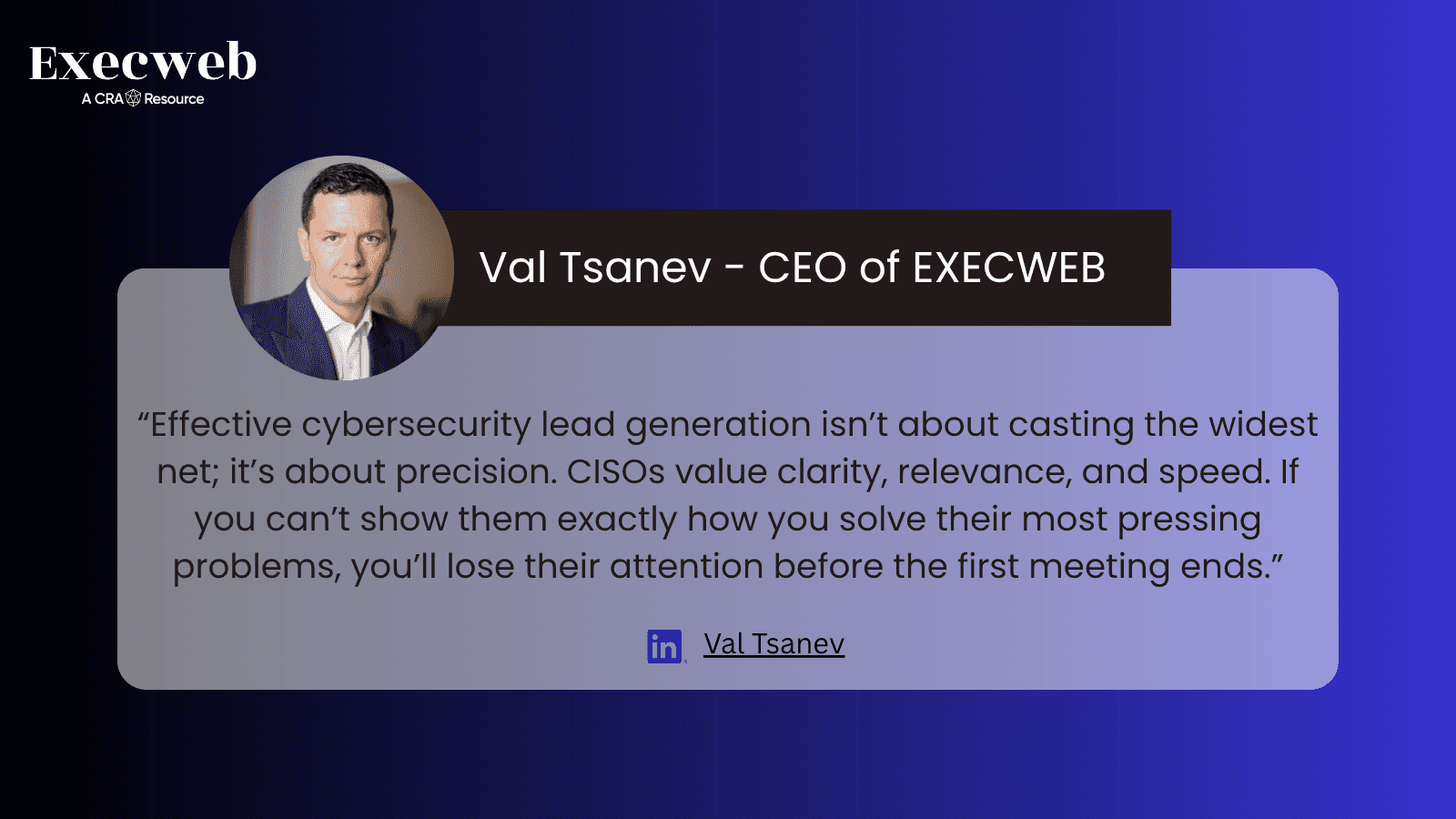
Strong cybersecurity lead generation strategies begin with precision targeting. Instead of casting a wide net, focus on understanding the industries and organizations that most need your solution.
Practical steps include:
- Analyze industry reports: Identify verticals (finance, healthcare, manufacturing) where compliance and security risks are highest.
- Track competitor clients: If your competitors serve a certain niche, chances are you can too.
- Use surveys and interviews: Engage directly with potential buyers to understand pain points.
- Leverage social listening: Monitor conversations on LinkedIn, Reddit, and security forums to learn what decision-makers are prioritizing.
When you know exactly who you’re trying to reach, your messaging resonates. You’re not just promoting a service, you’re solving specific problems for defined audiences.
2. Position Yourself as a Trusted Educator
CISOs and IT leaders don’t want another sales pitch; they want insight. Vendors who consistently provide value rise above the noise. This means making education a central pillar of cybersecurity lead generation.
Ways to educate while building trust:
- Publish thought leadership content: Blogs, whitepapers, and research reports that address current threats.
- Create tailored email campaigns: Share practical checklists, breach playbooks, or compliance guides.
- Leverage webinars and podcasts: Interactive sessions where you discuss emerging risks and answer questions live.
When businesses view your firm as a source of expertise, they’re far more likely to trust you with their defenses.
3. Use Webinars to Showcase Expertise and Generate Leads
Webinars are one of the most effective lead generation strategies for cybersecurity firms because they:
- Demonstrate authority: Share best practices on ransomware resilience, cloud security, or zero-trust adoption.
- Reach global audiences: Virtual formats attract prospects from anywhere.
- Collect data: Registration forms capture valuable lead information for follow-up.
- Encourage engagement: Q&A sessions create real conversations with prospects.
Unlike one-way marketing, webinars build relationships in real time, an essential step toward conversion.
4. Optimize Your Website for Visibility and Conversion
Your website is often the first impression, and it must work as a 24/7 lead generation engine. That means:
- SEO optimization: Use target keywords like cybersecurity lead generation, cybersecurity leads, and lead generation for cybersecurity companies naturally across content, metadata, and headings.
- Content hubs: Publish resources such as breach response guides or compliance checklists to attract organic traffic.
- Clear CTAs: Add forms offering free consultations, security assessments, or whitepapers.
- Mobile-first design: Ensure seamless browsing for decision-makers accessing on the go.
When optimized, your website transforms from a digital brochure into a consistent source of security leads.
5. Partner With Cybersecurity Marketing Platforms

Word-of-mouth and professional networks remain powerful tools for finding cybersecurity clients. Attend industry events, conferences, and webinars where decision-makers gather. Some effective strategies include:
Strategic cybersecurity partnerships are a prime example. They connect cybersecurity vendors directly with senior security leaders through 1:1 virtual meetings and curated roundtables. Instead of cold outreach, you’re introduced to decision-makers actively exploring solutions.
This targeted matchmaking is invaluable because it:
- Eliminates wasted outreach to unqualified prospects.
- Positions vendors in front of engaged CISOs ready to talk.
- Builds meaningful conversations that often accelerate the buying cycle.
For vendors struggling with cybersecurity lead generation, platforms like Execweb offer a direct line to high-value clients.
6. Leverage Industry Events to Build Trust
While digital channels are powerful, face-to-face (or virtual) interactions remain essential. Conferences like RSA, Black Hat, or niche regional events allow vendors to:
- Showcase solutions live.
- Network with CISOs and decision-makers.
- Stay updated on market trends.
- Build credibility through speaking engagements.
Attending events positions your firm as a visible, trusted player in the cybersecurity ecosystem.
7. Capture and Nurture Web Visitors
Every website visitor represents a potential cybersecurity lead. But to convert them, you need to capture their interest and keep the conversation going.
Use gated content: Offer whitepapers, case studies, or risk assessments in exchange for contact info.
- Segment email campaigns: Personalize messaging based on visitor behavior.
- Engage via LinkedIn: Connect with visitors professionally and share valuable insights.
- Nurturing isn’t about spamming; it’s about building relationships until prospects are ready to buy.
8. Build Social Proof and Case Studies
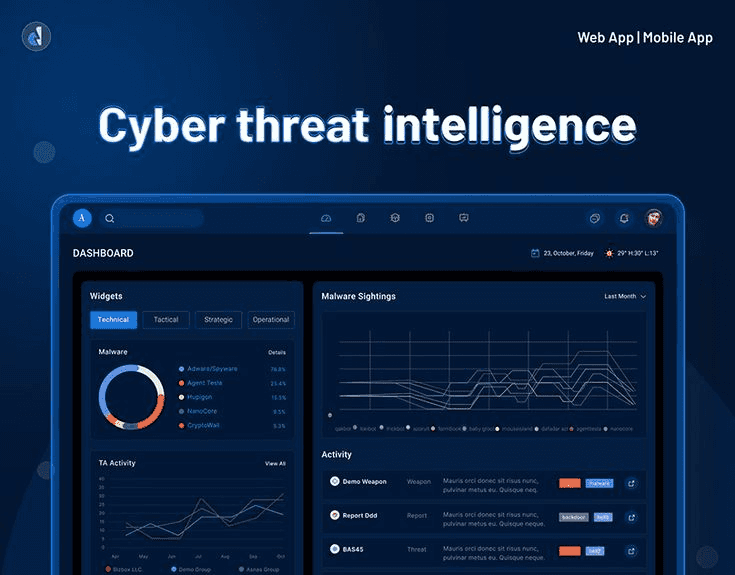
Security leaders don’t just want promises; they want proof. Case studies, client testimonials, and measurable results are powerful in lead generation for cybersecurity firms.
Highlight:
- How did you reduce breach risks for a client?
- Compliance challenges you helped overcome.
- ROI improvements from adopting your solution.
- Social proof reassures prospects that your solution works in real-world conditions.
The ROI of Strong Cybersecurity Lead Generation
Investing in cybersecurity lead generation strategies delivers far more than just a steady flow of prospects; it creates a foundation for sustainable growth. When your efforts are strategic and well-executed, you gain benefits that extend well beyond initial client acquisition:
- Higher-quality conversations with real decision-makers: Strong cybersecurity lead generation connects your team directly with CISOs and IT leaders who already understand the need for security, enabling deeper, more productive conversations instead of cold introductions.
- Shorter sales cycles through pre-built trust: When prospects are educated through thought leadership, webinars, and personalized touchpoints, they enter sales conversations informed and ready to move forward, reducing friction and delays.
- Stronger brand positioning in a crowded market: With countless vendors competing for attention, consistent lead generation paired with authority-building content positions your company as a trusted partner rather than just another option.
- Sustainable revenue growth from repeat and referral clients: High-quality leads often turn into long-term relationships. Satisfied clients renew, expand, and refer others, creating steady, compounding growth over time.
When executed correctly, lead generation for cybersecurity firms is not just a marketing function; it’s a growth engine that compounds over time. Every high-value lead captured today has the potential to translate into multiple opportunities tomorrow, strengthening both your pipeline and your market reputation.
Final Thoughts: Winning Clients in a Crowded Market
Cybersecurity buyers are discerning, skeptical, and overwhelmed by options. To win them over, vendors must focus on cybersecurity lead generation strategies that emphasize trust, education, and personalization.
From conducting deep market research to leveraging platforms like Execweb for direct access to CISOs, these tactics can transform the way vendors find and convert clients.
Ready to take the next step? Execweb’s CISO Executive Network is perfect for vendors looking to connect directly with CISOs. Get in touch today!
FAQs
1. How can I find cybersecurity clients quickly?
Focus on networking, targeted outreach, and leveraging verified lead databases for the US market.
2. What’s the best way to start a cybersecurity business?
Define a niche, develop a value proposition, and combine content marketing with lead generation strategies.
3. How do I get clients for my cybersecurity company?
Use multi-channel outreach: LinkedIn prospecting, email campaigns, webinars, partnerships, and referral programs.
4. Where can I find cybersecurity leads?
Professional networks, industry databases, LinkedIn Sales Navigator, and trade events are prime sources.
5. What’s the difference between cybersecurity leads and cybersecurity sales leads?
“Cybersecurity leads” are general potential clients, while “cybersecurity sales leads” are qualified prospects with a higher likelihood of conversion.
- Copied!
- 0 views
- 0 comments


Comment